

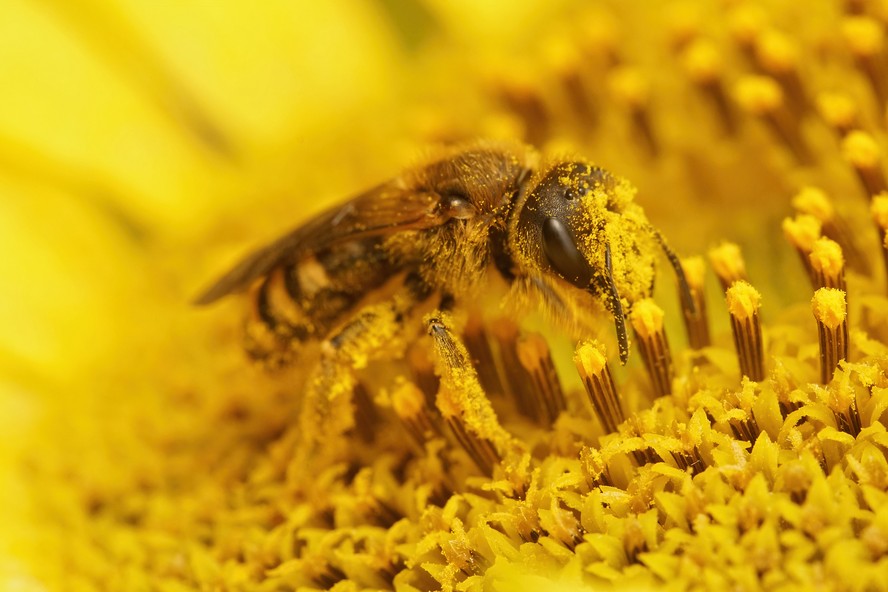
We have all heard the word “pollen”, and it is natural that we associate this term with small yellow balls, often portrayed in movies, carried by bees that germinate flowers. But, did you know that pollen is much more than that?
The pollen grain consists of a structure that stores the male gametes of plants; most of the time, it has a spherical shape and can vary greatly in size, although on a very small scale (12 to 300mm in diameter).
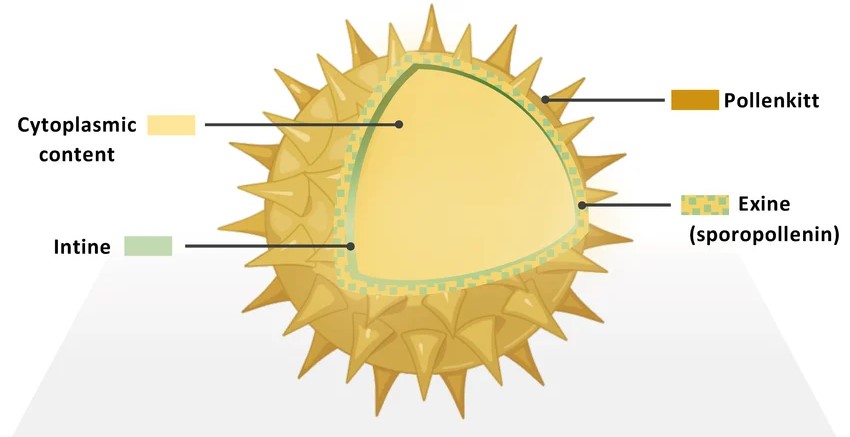
The structure of pollen has four main parts: the exine (outer wall), made of sporopollenin, an extremely resistant natural polymer that covers almost the entire extension of the grain; the intine (inner wall), a smooth part that surrounds the pollen’s cytoplasm (a gelatinous fluid that houses the other parts of the pollen); and finally, the vegetative and generative nuclei, which contain all the intracellular organelles of the pollen.
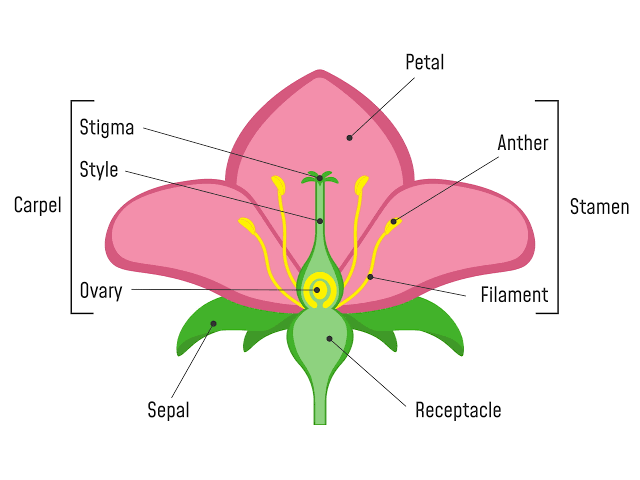
Pollen, therefore, contains the entire male gamete of flowering plants, being of extreme importance for the reproduction of a large part of the world’s flora. This element is formed in the flower’s anther, a part of the male flower, and is carried by the wind or by animals, especially bees.
After being released by the plant, the pollen floats in the atmosphere and is subject to the force of gravity and friction with the gas molecules that surround it, and, as soon as it comes into contact with the air, it loses water and creates empty spaces in its cell wall, which makes it lighter and considerably facilitates its aerial dispersion, being easily transported by air currents.
Pollen is a particle rich in proteins and antioxidants, being part of the diet of some living beings, especially insects, such as bees. These animals have collecting structures on their legs, which act as pollen baskets, storing the grains and transporting them to their habitats. Other animals, like small mammals and butterflies, also end up transporting pollen accidentally, when it gets unintentionally stuck to their bodies, and ends up spreading wherever the animals go.
Upon being transported, the pollen comes into contact with the female part of other flowers, where the plant’s fertilization process, called pollination, ultimately occurs, being primarily responsible for plant reproduction.
Pollen is of extreme importance not only for plant reproduction, but also for the entire ecosystem, ensuring the maintenance of biodiversity through the formation of seeds and fruits and serving as food for different species of pollinators.